Five Francophone projects in Manitoba and New Brunswick will receive joint provincial funding in 2026-27. The initiatives are designed to strengthen French-language education, arts, culture and community development through collaboration between organizations in both provinces.
For French-speaking newcomers and people considering a future in Canada, the announcement is relevant because strong local institutions can make it easier to build connections and participate in community life. However, this funding announcement does not create a new immigration program, application process or direct financial benefit for newcomers.
What has changed for Francophone projects in Manitoba?
On August 4, 2026, the Manitoba government announced that Manitoba and New Brunswick had approved five projects under their Co-operation and Exchange Agreement for the 2026-27 fiscal year.
Each province will contribute up to $20,000, creating a combined funding envelope of $40,000. The five applications originally requested a total of $42,570, so some amounts were adjusted to remain within the available budget.
The agreement is based on an interprovincial memorandum signed in 2002. Manitoba and New Brunswick strengthened the relationship in June 2026 through a four-year Francophone co-operation protocol. The Manitoba Francophone Affairs Secretariat co-ordinates the protocol, which supports exchanges, mentoring, training and the sharing of expertise.
Which projects will receive funding?
The official Manitoba backgrounder identifies these five collaborative initiatives:
- Arrière Scène / Backstage: a music-sector partnership between Le 100 Nons and Music·Musique NB, receiving $17,500.
- Manitoba French-language youth literature festival: a partnership between La Maison Gabrielle-Roy and Éditions Bouton d’Or Acadie, receiving $5,000.
- La couverture raconteuse: a storytelling project led by parent organizations in Manitoba and New Brunswick, receiving $8,000.
- Plain-language training for Francophone communities: a communications and adult-literacy partnership, receiving $4,500.
- Culinary arts, identity and community: a comparative cultural project connected with the tenth FISPA festival, receiving $5,000.
Together, these projects create opportunities for organizations to exchange knowledge and develop French-language cultural and educational resources. Their longer-term effects will depend on how each participating organization implements its project.
Why does this matter to French-speaking newcomers?
Immigration involves more than obtaining permission to enter or remain in Canada. Newcomers also need access to services, professional networks, cultural activities and a sense of belonging. Community organizations can support this process by creating spaces where French-speaking residents meet, learn and participate.
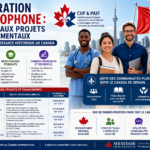
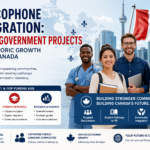
This provincial initiative also fits within broader public efforts to strengthen Francophone communities outside Quebec. In July 2026, the federal government announced approximately $1.3 million for a Francophone immigration project in Manitoba. That separate initiative focuses on promotion, digital tools, research and support for skills recognition.
IRCC also operates the Welcoming Francophone Communities initiative, which helps French-speaking newcomers settle and build connections in participating communities outside Quebec.
These measures show that Francophone community development and Francophone immigration can reinforce one another. They do not, however, replace the eligibility rules of any federal or provincial immigration program.
Does the funding create a new immigration pathway?
No. The bilateral funding is for approved community organizations and projects. It does not provide a new visa, work permit, study permit, provincial nomination or permanent residence stream.
French-speaking candidates interested in immigrating to Canada should review programs that actually have immigration criteria. Depending on their profile, these may include:
Every program has its own conditions. Speaking French, living in a Francophone community or participating in a funded activity does not by itself guarantee eligibility or approval.
What should prospective applicants do next?
If you hope to come to Canada, remain in Canada or bring an eligible family member, consider these practical steps:
- Identify your objective. Clarify whether you are seeking temporary residence, permanent residence or family sponsorship.
- Review official criteria. Check current government instructions, including language, education, work experience, job-offer and settlement-fund requirements where applicable.
- Assess your French-language evidence. Some programs require results from an approved language test rather than a personal assessment of fluency.
- Avoid treating community funding as an immigration invitation. The new Francophone projects in Manitoba may strengthen community life, but they do not create individual immigration status.
- Seek advice based on your circumstances. A suitable pathway depends on your complete personal, family, educational and employment profile.
How Mesidor Immigration can help
Canadian immigration rules can be complex, and a promising public announcement may not apply to every person in the same way. Mesidor Immigration can review your circumstances, explain potentially relevant options and help you understand the requirements and risks before you decide how to proceed.
The new Francophone projects in Manitoba are positive investments in local capacity and interprovincial collaboration. If you would like to explore whether a federal or provincial immigration program may fit your goals, contact Mesidor Immigration to request a consultation.
This article provides general information only and does not constitute legal or immigration advice. Immigration policies and program requirements may change. Readers should consult the appropriate government authorities or a qualified immigration professional regarding their individual circumstances.
Official Sources





Recent Comments