A Bold Vision for French-Speaking Communities Outside Quebec
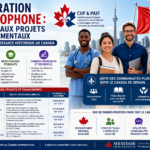
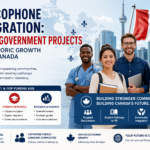
Francophone immigration serves as a vital pillar for sustaining the cultural diversity, linguistic heritage, and economic dynamism of Canada’s official language minority communities. Through the Centre for Innovation in Francophone Immigration (CIFI) and the Francophone Immigration Support Program (FISP), Immigration, Refugees and Citizenship Canada (IRCC) actively tackles demographic and regional economic challenges. By designing pathways specifically tailored to French-speaking and bilingual newcomers, these frameworks systematically dismantle historic barriers to entry.
As an immigration consulting firm based in Winnipeg, Manitoba, Mesidor Immigration observes firsthand how these tailored initiatives empower skilled workers and international students. Instead of relying on rigid, generalized pathways, the latest strategic rollout supports localized programs that directly align global talent with the specific needs of Canadian employers. For any bilingual professional considering making Canada their permanent home, understanding these distinct regional projects is an excellent first step.
Expanding Local Sectors through Strategic Funding
The strategic framework operates by funding grass-roots and sector-specific initiatives designed to improve recruitment, simplify credential recognition, and promote linguistic duality. Here are some of the most notable projects driving this momentum across different regions:
1. Boosting Targeted Labour Paths in Manitoba and Ontario
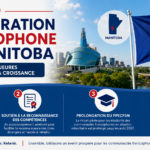
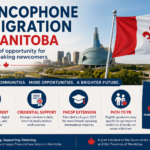
In Manitoba, a dedicated $1,300,000 initiative is streamlining the selection process by introducing innovative digital solutions and supporting foreign credential recognition for health professionals. Furthermore, multiple projects focus heavily on early childhood education. For example, the Association francophone à l’éducation des services à l’enfance en Ontario is actively recruiting 100 internationally trained educators, creating positive economic ripple effects that stretch into British Columbia, Nova Scotia, Prince Edward Island, and Yukon.
2. Specialized Recruitment for High-Demand Sectors
- Information and Communications Technology: The Information and Communications Technology Council (ICTC) manages a global talent mapping initiative to identify bilingual tech professionals worldwide.
- Healthcare Systems: New Brunswick is addressing critical staff shortages by executing an ethical recruitment project tailored for Moroccan-trained nurses whose educational backgrounds align with provincial standards.
- Rural Economic Influx: In Eastern Ontario, the Centre de services à l’emploi de Prescott-Russell is piloting a project to integrate 80 qualified French-speaking candidates directly into rural small- and medium-sized businesses.
Bridging the Gap from International Studies to Permanent Residency
A primary focus of recent Francophone immigration investments centers on integrating international students smoothly into local communities. Rather than treating education and permanent residency as entirely separate stages, several institutions are building direct, supportive bridges.
For instance, the Université de Hearst in Northern Ontario has established a $1.1 million program built directly into its curriculum to offer structured guidance on permanent residency pathways. In Western Canada, Campus Saint-Jean is launching a comprehensive navigator service hub to scale up processing capacity and improve settlement retention across Alberta. Meanwhile, Université Sainte-Anne in Nova Scotia supports students through localized mentoring, volunteering, and part-time placements to ensure they build lasting cultural roots while completing their studies.
                       CIFI & FISP FUNDING HUB
                                  │
         ┌────────────────────────┼────────────────────────┐
         ▼                        ▼                        ▼
  Labor Recruitment       Student Retention       Research & Evidence
  • Tech talent mapping   • Campus Navigators    • Systemic barriers
  • Nursing pathways      • Degree integration    • Employer guides
Data-Driven Growth and Strategic Overview
The continuous rollout of these community-led projects demonstrates Canada’s long-term commitment to balanced regional development. To understand the scale and diversity of the funding allocations, consider the following structural breakdown of ongoing initiatives:
| Project Leader / Organization | Primary Operational Focus | Funding Allocated & Timeline |
|---|
| Economic Development Council | Manitoba labor market integration, digital tools, and health professional licensing. | $1,300,000 over 2 years. |
| Université de l’Ontario français | Managing the Observatoire en immigration francophone to collect evidence-based data for policy makers. | $1,573,000 over 4 years. |
| Government of New Brunswick | Recruiting and certifying 600 international French-speaking teachers and childhood educators. | $1,972,000 over 4 years. |
| Société économique de l’Ontario | Placing 90 qualified bilingual candidates and refugees into high-priority Northern Ontario jobs. | $909,000 over 3 years. |
| Fédération des communautés francophones | Launching international information campaigns to counter immigration misinformation. | $300,000 over 3 years. |
Mapping Your Personal Immigration Strategy
Navigating these distinct regional pathways requires a clear understanding of where your specific professional skills are in demand. Outside of these target-specific projects, qualified candidates can always pursue pathways via the federal Express Entry System or review broader resources on immigrating to a Francophone community outside Quebec.
To explore how these provincial variations might benefit your profile, read our detailed breakdown on Understanding Manitoba Provincial Nominee Programs or explore How Foreign Credential Recognition Works. Aligning your professional credentials with the right regional project can dramatically optimize your overall timeline.
Navigating the complexities of Canadian immigration can be challenging. If you have questions about your eligibility or need assistance with your immigration project, we are here to help. We invite you to contact Mesidor Immigration today for a comprehensive eligibility assessment. Let us be your trusted partner on your journey to Canada.




Recent Comments