A Shift in Canada’s Asylum System
Refugee determination in Canada is undergoing significant structural changes following the introduction of the Strengthening Canada’s Immigration System and Borders Act, also known as Bill C-12. The Canadian Council for Refugees (CCR) recently submitted a detailed commentary regarding these newly proposed regulations published in the Canada Gazette. While the federal government aims to enhance processing efficiency, the broad scope of these new provisions raises serious questions regarding access to justice and compliance with international non-refoulement obligations.
As a well-known Canadian Immigration Consulting firm based in Winnipeg, Manitoba, we understand how daunting these shifting frameworks can be for individuals seeking safety. The updated guidelines introduce strict timelines and electronic filing mandates that fundamentally reshape how claims are processed. For anyone navigating this changing landscape, staying informed about these legal developments is absolutely essential.
Key Regulatory Changes Impacting Refugee Determination
The proposed framework introduces rigorous administrative hurdles that claimants must meet shortly after entering the country. Navigating these changes requires a precise understanding of the new procedural expectations:
1. The One-Year Application Bar and Limited Exemptions
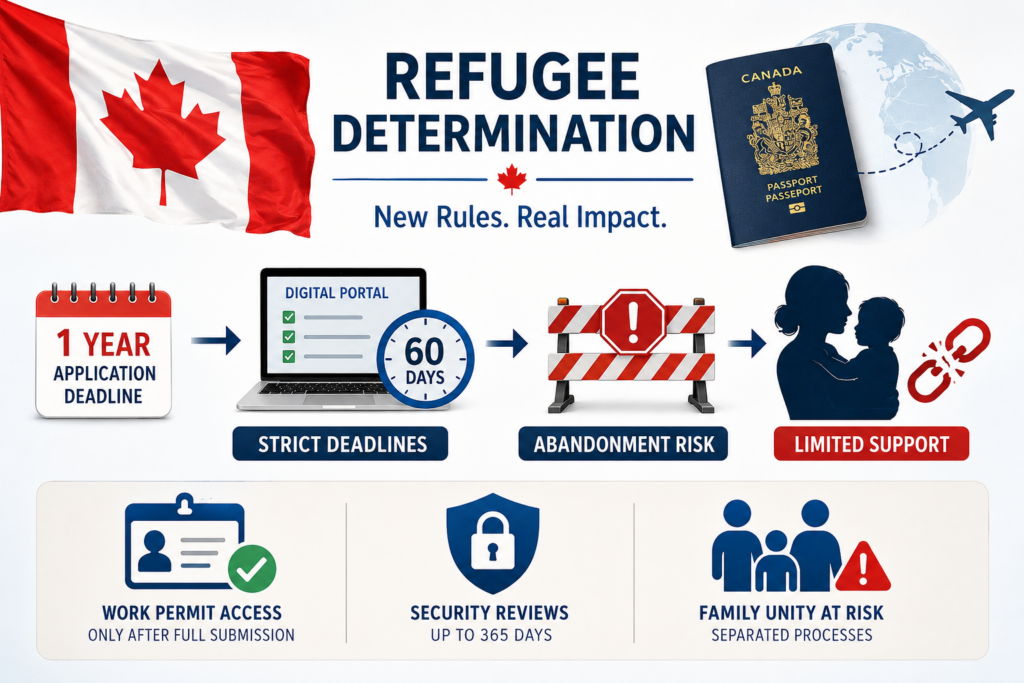
The new regulations establish a strict one-year deadline from the date of arrival to initiate a claim. Unfortunately, the government has proposed an incredibly narrow set of exceptions to this rule, primarily limiting leniency to unaccompanied minors. This rigid boundary means that many individuals who face valid persecution but cannot file within the first year will be barred from having their cases heard by the Immigration and Refugee Board (IRB).
2. Strict Digital Portal Deadlines
- The 60-Day Window: Once a claim is initially deemed eligible, individuals have only 60 calendar days to submit all supporting documents and detailed “basis of claim” data through a digital portal.
- Limited Extensions: Claimants can request a single 30-day extension, which appears to be automatically granted. However, no further extensions are permitted under normal circumstances, even in the event of medical emergencies or unexpected hardships.
- Abandonment Referrals: Failing to complete the digital requirements or missing a scheduled examination results in an immediate referral to the Refugee Protection Division (RPD) for an abandonment hearing.
Addressing Vulnerabilities and Procedural Barriers
A major point of discussion surrounding the new refugee determination measures is the lack of built-in accommodations for highly vulnerable demographics. Online portals create systemic barriers for individuals lacking digital literacy, facing language obstacles, or experiencing severe mental and physical health challenges.
Furthermore, the regulations do not provide for the immediate appointment of a Designated Representative (DR) for unaccompanied minors or adults unable to understand the proceedings during the initial document collection phase. Instead, a representative is only appointed once the case has already been referred for an abandonment hearing. This gap forces vulnerable individuals to navigate complex legal portals completely on their own, severely undermining the fairness of the initial intake process.
                  PROPOSED ASYLUM TIMELINE & OBSTACLES
                                    │
         ┌──────────────────────────┴──────────────────────────┐
         ▼                                                     ▼
Strict 60-Day Deadline                                   Delayed Support
• Digital portal submissions                          • No DR during document phase
• Maximum one 30-day extension                        • Early abandonment risks
Impact on Work Permits and Minister’s Due Diligence
The new operational guidelines also alter the timeline for securing employment authorization. Under the proposed rules, claimants must fully submit their core information packages before they can obtain a work permit. This dynamic forces individuals to rush their sensitive applications to subvert financial distress, which frequently results in lower-quality initial submissions.
| Regulatory Element | Government Proposal | Impact identified by the CCR |
|---|
| Minister’s Due Diligence (MDD) | A 365-day timeline for security reviews before RPD referral, extendable due to “operational limitations.” | Risks baking long administrative delays into the system, keeping straightforward claims in limbo. |
| Family Unity Framework | Individualized eligibility assessments that can separate family members into different streams. | Leads to inefficient parallel processes where parents and children are assessed separately. |
| Work Permit Issuance | Access restricted until all digital portal documents are successfully processed. | Increases reliance on provincial social assistance and restricts access to legal counsel. |
Mapping Your Legal Strategy
Understanding how these rigid timelines interact with your specific situation is vital to preventing a claim from being declared abandoned. Beyond the dockets of the asylum system, individuals looking to move to Canada can explore various economic pathways via the Immigration, Refugees and Citizenship Canada portal or learn about settling through Francophone immigration pathways outside Quebec.
To evaluate local options, feel free to read our comprehensive overview of the Manitoba Provincial Nominee Program (MPNP) or review our practical advice on Navigating Foreign Credential Recognition. Securing proper legal guidance early ensures you meet every strict digital deadline seamlessly.
Navigating the complexities of Canadian immigration can be challenging. If you have questions about your eligibility or need assistance with your immigration project, we are here to help. We invite you to contact Mesidor Immigration today for a comprehensive eligibility assessment. Let us be your trusted partner on your journey to Canada.










Recent Comments