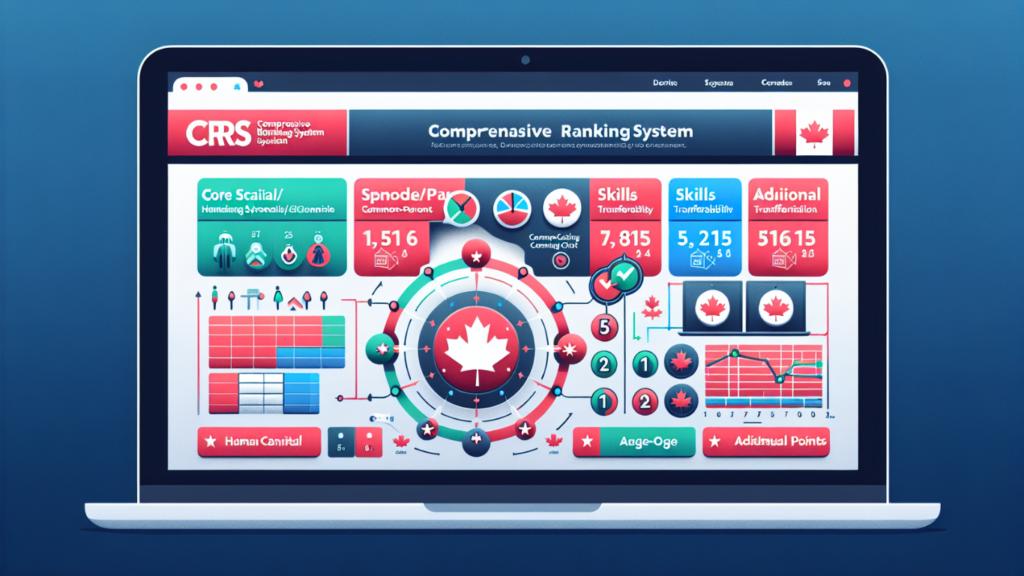

Canada’s Express Entry Selection System employs the Comprehensive Ranking System (CRS) to rank skilled worker candidates. Each eligible candidate receives a score based on factors including education, work experience, and language proficiency. An experienced immigration consultant can assist you in crafting an optimal Express Entry profile, providing valuable insights to enhance your score.
What is the functioning of the CRS?
The goal of the Comprehensive Ranking System is to assess each applicant by assigning points to various criteria. Through Express Entry Draws, candidates with high scores are dynamically chosen to receive an Invitation to Apply (ITA) for Permanent Residency.
Regularly conducted by Immigration, Refugees and Citizenship Canada (IRCC), these draws play a crucial role. To enhance your likelihood of obtaining an Invitation to Apply (ITA), striving for the highest possible CRS points is essential, given the competitive nature of the Express Entry selection system.
Factors Determining CRS Scores
These are the four main factors:
- Human Capital
- Skill Transferability
- Spouse/Common-law Partner
- Additional Factors
In addition, the following factors are considered within these primary elements:
- Age
- Educational qualifications
- Work experience
- Language skills (English and/or French)
- Job offers (if applicable)
- Adaptability to life in Canada
- Spouse or common-law partner
The total achievable score is 1,200 points, divided into 600 core points and 600 additional points.
What constitutes CRS Core points?
- Skills
- Work experience
- Credentials and other factors (such as age, language skills, education, etc.) of your spouse or common-law partner
- Skills transferability
What constitutes Additional Points?
- Canadian qualifications (degrees, diplomas, certificates)
- Valid job offer(s)
- Provincial Nomination from a province or territory
- French language skills
- A sibling living in Canada or a sibling who is a permanent resident of Canada
Total Points to be Earned Across the Four Primary Categories
SECTION A – Core/Human Capital
| Criteria | Maximum Points (With Spouse) | Maximum Points (Without Spouse) |
|---|---|---|
| Age | 100 | 110 |
| Education | 140 | 150 |
| Language Skills (English/French) |
150 | 160 |
| Canadian Work Experience | 70 | 80 |
SECTION B – Spouse/Common-Law Partner
| Criteria | Maximum Points |
|---|---|
| Education | 10 |
| Language Skills (English/French) | 20 |
| Canadian Work Experience | 10 |
SECTION C – Skills Transferability
| Education | Maximum Points |
|---|---|
| Language Skills (English/French) + Education | 50 |
| Canadian Work Experience + Education | 50 |
| Foreign Work Experience | Maximum Points |
|---|---|
| Language Skills (English/French) + Foreign Work Experience | 50 |
| Foreign Work Experience + Canadian Work Experience | 50 |
| Certificate of Qualification (Trades) | Maximum Points |
|---|---|
| Language Skills (English/French) + Education Certificate | 50 |
SECTION D – Additional Points
| Criteria | Maximum Points |
| Sibling Living in Canada | 15 |
| French Language Skills | 30 |
| Post-Secondary Canadian Education | 30 |
| Arranged Employment | 200 |
| Provincial Nomination | 600 |
The Immigration, Refugees and Citizenship Canada (IRCC) oversees the Comprehensive Ranking System (CRS), which assesses your immigration profile within the Express Entry system. The CRS score gauges an applicant’s eligibility for immigration to Canada. The top-ranking candidates are extended an Invitation to Apply (ITA) for permanent residence.
Mesidor Immigration possesses extensive experience in guiding applicants through the Express Entry selection process. Feel free to contact us today to leverage our professional immigration expertise.
Contact us and get your Canadian immigration journey started today.
Schedule a meeting for an Initial Consultation with Mesidor Immigration today. A Regulated Canadian Immigration Consultant will analyze your immigration situation and help you find a solution based on your goals.
Search the Site
Latest Immigration News
- Understanding Student and Temporary Worker Numbers in Canada: 2026 Data Analysis

- Thunder Bay Forward: Immigration Opportunities in Northern Ontario Through 2030

- Yukon Nominee Program 2026: Critical New Updates That Employers and Foreign Workers Must Know

- Refugee Protection Claims Reach Critical High: 5 Major Trends for 2026

- Canada’s Immigration Selection Model: Recent Changes and Expert Perspectives

- Programme pilote d’immigration dans les communautés francophones (PPICF) : Une nouvelle voie majeure pour les francophones

- New Citizenship Rules for Canadians Born or Adopted Abroad: What You Need to Know

- Canada’s Refugee Backlog Continues to Grow: What the Latest IRB Data Means for Applicants

Archives
Subscribe to our Newsletter
Subscribe to our blog and get notified when we publish new posts.
Search the Site
Latest Immigration News
- Understanding Student and Temporary Worker Numbers in Canada: 2026 Data Analysis

- Thunder Bay Forward: Immigration Opportunities in Northern Ontario Through 2030

- Yukon Nominee Program 2026: Critical New Updates That Employers and Foreign Workers Must Know

- Refugee Protection Claims Reach Critical High: 5 Major Trends for 2026

- Canada’s Immigration Selection Model: Recent Changes and Expert Perspectives

- Programme pilote d’immigration dans les communautés francophones (PPICF) : Une nouvelle voie majeure pour les francophones

- New Citizenship Rules for Canadians Born or Adopted Abroad: What You Need to Know

- Canada’s Refugee Backlog Continues to Grow: What the Latest IRB Data Means for Applicants

Recent Comments
Archives
Subscribe to our Newsletter
Subscribe to our blog and get notified when we publish new posts.
Recent Comments