A Shifting Landscape in Canada’s Asylum System
Refugee determination in Canada is facing a major overhaul following the introduction of legislative updates under Bill C-12. The Canadian Council for Refugees (CCR) recently submitted formal feedback regarding proposed changes to the Refugee Protection Division (RPD) rules. While the advocacy group acknowledges the government’s valid goal of improving system efficiency, it has issued an urgent warning that prioritizing speed over procedural fairness could severely endanger vulnerable individuals seeking safety.
As a Regulated Canadian Immigration Consultant (RCIC) based right here in Winnipeg, Manitoba, I closely monitor these administrative updates to ensure my clients receive the highest level of advocacy. The newly proposed rules introduce rigid timelines and electronic mandates that fundamentally alter how claims are structured. For anyone navigating this changing landscape, understanding these new procedural hurdles is absolutely vital to protecting your legal rights.
The Core Elements of the Proposed RPD Rule Changes
The strategic overhaul seeks to accelerate the initial intake process by enforcing strict digital deadlines and highly technical documentation requirements. Here is a breakdown of the key areas identified in the recent tribunal submission:
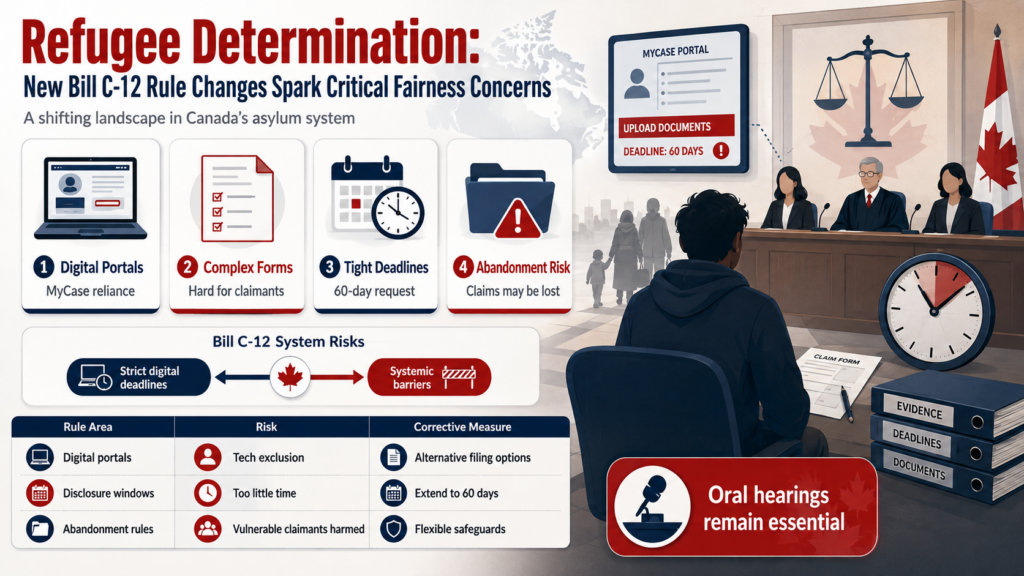
1. Mandatory Reliance on Digital Portals
The updated framework relies heavily on online platforms, such as the MyCase portal, to manage and submit essential claim information. However, this digital-first approach poses a direct threat to unrepresented claimants and individuals facing severe language barriers. Without access to stable technology or expert guidance, many applicants may struggle to navigate these portals correctly.
2. Complex Application Paperwork
Furthermore, the forms required to establish the basis of a claim remain highly complex. The CCR has actively urged the tribunal to simplify the overall language used in these documents. Ensuring that the questions are clear and accessible is essential to preventing devastating errors during the initial filing phase.
3. Strict Document Disclosure Deadlines
Under the current proposals, the timeline for disclosing supporting evidence is exceptionally tight. Advocates are pushing for the tribunal to extend the document disclosure window to at least 60 days. A longer timeframe ensures that claimants have a reasonable opportunity to gather crucial evidence from their home countries.
4. The Risk of Unfair Claim Abandonment
Perhaps the most critical concern involves the heightened risk of a claim being declared abandoned. If an applicant fails to meet a strict digital deadline due to circumstances beyond their control—such as experiencing homelessness or temporary housing insecurity—their file could be thrown out completely. This means that individuals with genuine protection needs could face deportation without ever having their cases heard on the merits.
                       PROPOSED BILL C-12 SYSTEM RISKS
                                      │
         ┌────────────────────────────┴────────────────────────────┐
         ▼                                                         ▼
Strict Digital Deadlines                                    Systemic Barriers
 • Complex portal submission                              • Risk of claim abandonment
 • Short disclosure windows                               • Impact on unhoused individuals
The Crucial Importance of Oral Hearings
To safeguard the fundamental human rights of asylum seekers, advocates strongly emphasize that the tribunal must maintain oral hearings. In-person proceedings allow decision-makers to assess credibility fairly and understand the nuanced context of each individual’s experiences. Replacing these vital face-to-face interactions with rigid administrative shortcuts compromises the core justice system.
Proactively Managing Your Legal Status in Canada
| Proposed Rule Area | Identified Systemic Risk | Proposed Corrective Measure |
|---|
| Digital Portals (MyCase) | Technical exclusion for unrepresented or low-literacy applicants. | Provide alternative filing methods and simplified tech interfaces. |
| Disclosure Windows | Insufficient time to gather international evidence under strict limits. | Extend the standard evidentiary disclosure timeline to 60 days. |
| Abandonment Protocols | Unhoused or vulnerable claimants penalized for administrative delays. | Establish flexible safeguards for individuals facing extreme hardship. |
Mapping Your Immigration Strategy
Avoiding procedural pitfalls requires an experienced, proactive approach to your paperwork. Beyond the specific rules of the tribunal, individuals looking to establish temporary or permanent residency can explore various options via the official Immigration, Refugees and Citizenship Canada portal or evaluate alternative economic streams.
To discover how provincial pathways might benefit your long-term goals, feel free to read our comprehensive overview of the Manitoba Provincial Nominee Program (MPNP) or review our practical advice on Navigating Foreign Credential Recognition. Securing trusted professional advice early ensures that your documentation meets every strict deadline seamlessly.
Navigating the complexities of Canadian immigration can be challenging. If you have questions about your eligibility or need assistance with your immigration project, we are here to help. We invite you to contact Mesidor Immigration today for a comprehensive eligibility assessment. Let us be your trusted partner on your journey to Canada.











Recent Comments